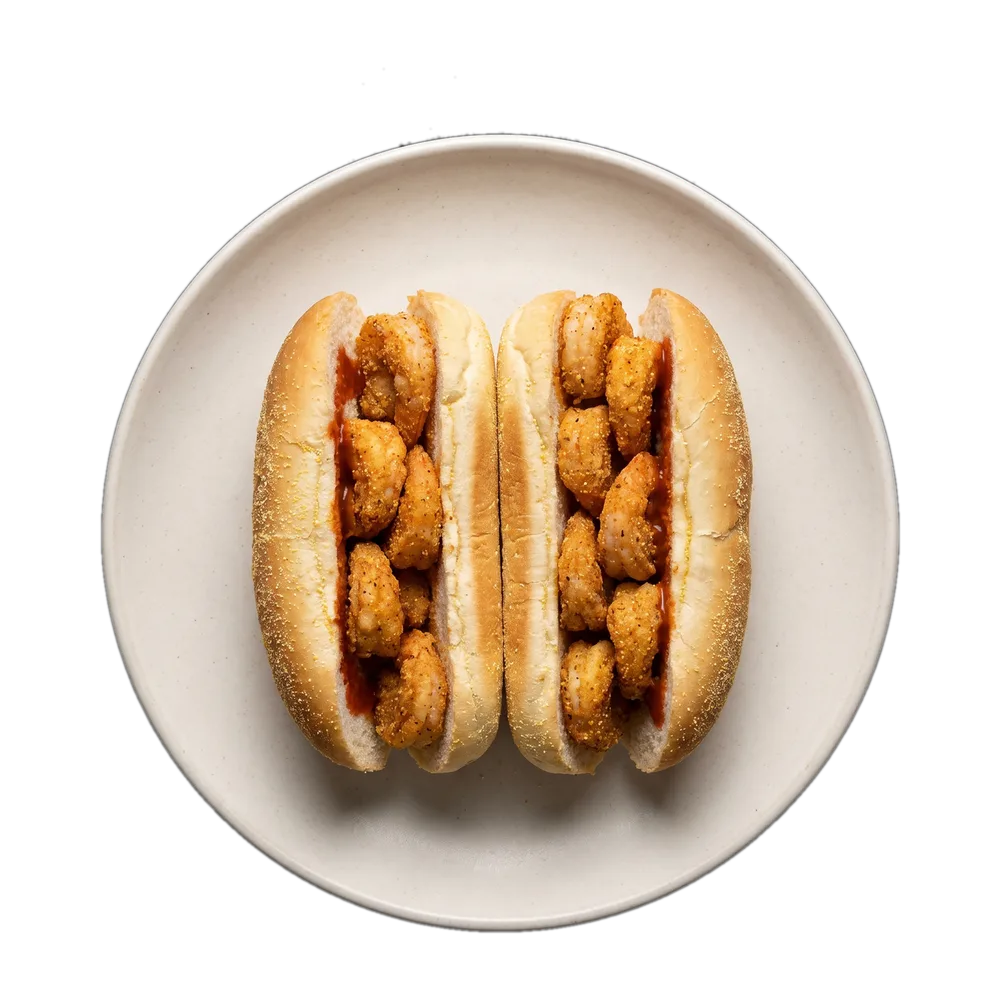
Shrimp Po' Boy
2438kcal113.2g protein136.3g fat193.6g carbs*Estimates computed from the ingredient list; cost uses average US supermarket prices. Not a substitute for packaging measurements or your receipt.
Contains gluten, dairy, egg, peanut, shellfish, fish · sometimes contains soy — check the label
Restrictions
Containsgluten · dairy · egg · peanut · shellfish · fishIt is in an ingredient you cannot leave out.
Sometimes contains — check the labelsoy (Mayonnaise)Some brands have it, some do not. The recipe cannot tell, so this is the one you check yourself.
Diets
PescatarianNo porkNo alcohol
Worked out from the ingredient list. It knows nothing about brands, shared equipment or cross contamination, and it is not a certification — if you have an allergy, you still have to read the label.
Ingredients
Servings:
| 2 lb | shrimp (peeled, deveined, tails off, patted dry) |
| 1 cup | buttermilk |
| 2 tbsp | Louisiana-style hot sauce |
| 1 ½ cup | all-purpose flour |
| ¾ cup | fine cornmeal |
| 4 tsp | Creole or Cajun seasoning (divided between soak, coat and sauce) |
| ½ tsp | cayenne pepper |
| 1 l | peanut or other neutral frying oil |
| ¾ cup | mayonnaise |
| 2 tbsp | Creole or whole-grain mustard |
| 1 tbsp | prepared horseradish |
| 1 tbsp | ketchup |
| 2 tbsp | sweet pickle relish |
| 1 tsp | Worcestershire sauce |
| 1 tbsp | lemon (juice) |
| 1 tsp | smoked paprika |
| 4 unit | French bread (6 to 8 inch lengths, split) |
| 2 tbsp | butter (softened, for the cut faces) |
| 2 cup | iceberg lettuce (finely shredded) |
| 2 unit | tomato (ripe, sliced thin) |
| 16 slice | dill pickle (sliced into rounds) |
Optional
Not counted above. The dish works without them.
| 1 tbsp | capers (chopped, in the rémoulade) |
| 2 unit | scallion (thinly sliced, in the rémoulade) |
| 2 cup | panko breadcrumbs (the modern shallow-fry coating) |
| 2 unit | eggs (beaten, for the panko route) |
| 1 tsp | garlic powder (in the dry coat) |
| 1 tsp | onion powder (in the dry coat) |
| ½ tsp | black pepper (ground) |
| 1 unit | onion (thinly sliced, under the shrimp) |
Steps
- mix5 minwhisked smooth, then refrigerated at least an hourmayonnaise + mustard + horseradish + ketchup + relish + Worcestershire + lemon juice + smoked paprika + 1 tsp of the Creole seasoning = rémoulade. Make it first and give it the cold hour: raw horseradish and mustard are volatile and aggressive on the minute they are stirred in, and an hour is what turns a bowl of condiments into a sauce with one flavour. Salt distributes in the same time. Taste it cold, not warm, since fat mutes seasoning as it chills and a sauce that tasted right in the bowl will read flat on the bread.
- marinate30 minrefrigerated, shrimp fully submergedshrimp + buttermilk + hot sauce + 1 tsp of the Creole seasoning. This is the wet half of a wet-then-dry coat, and it does two jobs: the salt and the hot sauce season the shrimp itself, which nothing later in the recipe can do, and the buttermilk leaves a viscous film that gives the dry mix something to hold. Shrimp tossed dry into flour take on a thin dusting that sheds into the oil in sheets and leaves you with bald shrimp and a pot full of scorched flour. Thirty minutes is plenty; the acid in buttermilk will start to firm the surface of the shrimp past an hour.
- mix3 minin a wide shallow pan, whisked to distributeflour + cornmeal + the remaining 2 tsp Creole seasoning + cayenne, mixed until no streaks of pale flour remain. Season the coat as heavily as you seasoned the shrimp. There is more breading than shrimp on the tongue in a bite of this sandwich, and unseasoned breading is the commonest reason a home po' boy tastes flat despite everything else being right. Taste a pinch of the dry mix — it should taste too strong on its own, because it is about to be diluted by a shrimp and a mouthful of bread.
- prep12 minlifted from the buttermilk, pressed into the dry mix, then rested on a rackshrimp taken out one at a time, allowed to drip for a second, and pressed firmly into the flour and cornmeal on both sides before going onto a rack in a single layer for ten minutes. The press matters — laying a shrimp on the mix coats it, pressing embeds it. The rest matters more: the flour draws moisture out of the buttermilk film and hydrates into a paste that glues the coat to the shrimp, which is why coated shrimp that go straight into the oil lose their crust and rested ones keep it. Ten minutes is enough; a second dip and rest gives the thicker craggy coat some sources prefer.
- fry12 min350°F / 177°C, small batches, oil back to temperature between eachcoated shrimp lowered in a few at a time and cooked two to three minutes until the crust is deep gold and the shrimp have curled into a loose C. The shape is the doneness gauge and it is more reliable than the clock: a relaxed C is cooked, a tight O is a shrimp that has contracted past done and gone rubbery, and the distance between them is about ninety seconds. Shrimp are cold and numerous, so they pull heat out of the oil hard — crowd the pot and the temperature falls below the point where escaping steam keeps oil out of the crust, and you get a greasy shell over a steamed shrimp. Drain on a wire rack, never on paper in a pile, because a drained shrimp sitting in its own trapped steam softens the crust in under two minutes.
- toast4 mincut faces buttered, griddled or broiled until the crumb dries and colourssplit French bread, buttered on both cut faces and toasted until lightly gold and dry to the touch. The bread has to be crusty outside and near-cotton inside — a New Orleans loaf shatters at the crust and compresses at the crumb — and a soft sub roll is the wrong bread, since it goes to pulp under a quarter cup of mayonnaise-based sauce. The butter and the toast together form a fat barrier so the rémoulade sits on the surface instead of soaking straight through to the bottom crust.
- top4 mindressed, shrimp last, served immediatelyrémoulade spread on both cut faces + shredded lettuce + sliced tomato + pickle rounds, and the fried shrimp laid on last. Shrimp go on top of the vegetables and never underneath, because a crust in contact with sauce and tomato juice is soft before the sandwich reaches the table. About a quarter cup of sauce per sandwich across both faces is the measure the set supports. Dressed — mayonnaise, lettuce, tomato and pickle — is New Orleans shorthand and it is the default state of the sandwich; ordering one undressed is the exception, not the other way round.