Tier 1 · Prep
TO CHILL
Cooling something down on purpose — in the refrigerator, an ice bath or the freezer — because a change happens only when the temperature drops, and you are waiting for it.
Why it works
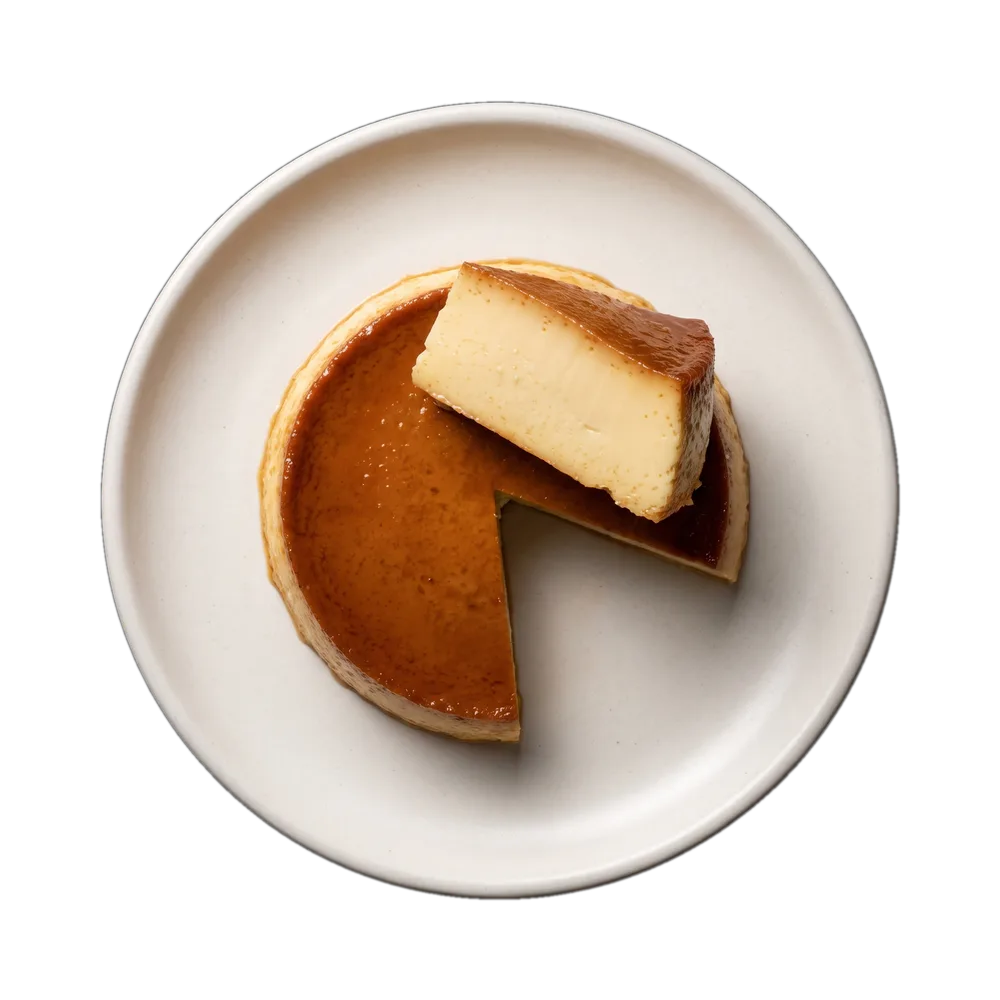
Chilling is cooking's other direction: instead of adding heat to make something set, you take heat away. Butter is soft above about 20°C and firm below about 15°C, so pastry and croquette mixtures that were unworkable warm become firm enough to cut, shape and bread once cold, and the butter layers in a puff pastry stay separate in the oven only if they went in cold. Gelatin sets below about 15°C. Custards, flans and cheesecakes finish setting as they cool — the proteins that coagulated in the oven tighten further over hours in the refrigerator, which is why a flan that wobbles like liquid straight from the oven cuts cleanly the next morning. Chilling also relaxes gluten in a rested dough and, separately, is a safety rule: cooked food should not spend more than two hours between 4°C and 60°C. The refrigerator sits at about 4°C and is slow; an ice bath or twenty minutes in the freezer is for when firmness is needed now.
How to tell
- The surface has gone from glossy to matte, and a fingertip pressed on it leaves a mark that stays rather than sinking in.
- A knife drawn through comes out clean instead of coated.
- A flan or panna cotta wobbles as one piece — a jelly wobble, not a liquid slosh.
- Dough or croquette mixture releases from the hands and the board without sticking.
When it goes wrong
- The flan, pudding or cheesecake is still soft in the middle after an hour in the refrigerator.
- Not enough time. Custards set as they cool and a deep dish takes four hours or overnight; an hour has only cooled the outside.
- Pastry shrank in the oven, or butter ran out of the puff and pooled underneath.
- It went in warm. Soft butter melts before the structure sets; cold pastry holds its shape and its layers. Chill the shaped pastry before baking, not just the dough.
- The croquette or dough mixture will not hold a shape and smears on the hands.
- Too warm. The fat is soft and the starch has not firmed. Return it to the refrigerator until a finger leaves a mark, and work in small batches so the rest stays cold.
- A rubbery skin formed on the custard, or the dough dried and cracked at the edges.
- Chilled uncovered. Cold air is dry. Press film onto the surface of a custard; wrap dough tightly.
Recovering it
Under-chilled is almost always fixable with more time or a colder place — twenty minutes in the freezer will firm a mixture that the refrigerator has not. A custard that will not set after a full night was under-cooked, not under-chilled, and needs gentle reheating with a little more cooking. Warm pastry that has already spread in the oven cannot be re-chilled into shape; it is what it is, and the fix is the next batch. A skin on a custard peels off in one sheet.
Where to practice it
It carries to
Recipes using it
| Aam Panna | South Asian | 45 |
| Beef Wellington | European | 180 |
| Chicha Venezolana | Latin American & Caribbean | 210 |
| Croquetas | European | 120 |
| Pay de Queso | Latin American & Caribbean | 240 |
| Quesillo Venezolano | Latin American & Caribbean | 260 |
| Spanish Flan | European | 300 |
| Taco Dip | American, Latin American & Caribbean | 45 |
Generated from recipe step verbs and ingredient preparation forms. It is never authored, and it cannot drift from the recipes.