Mie Goreng
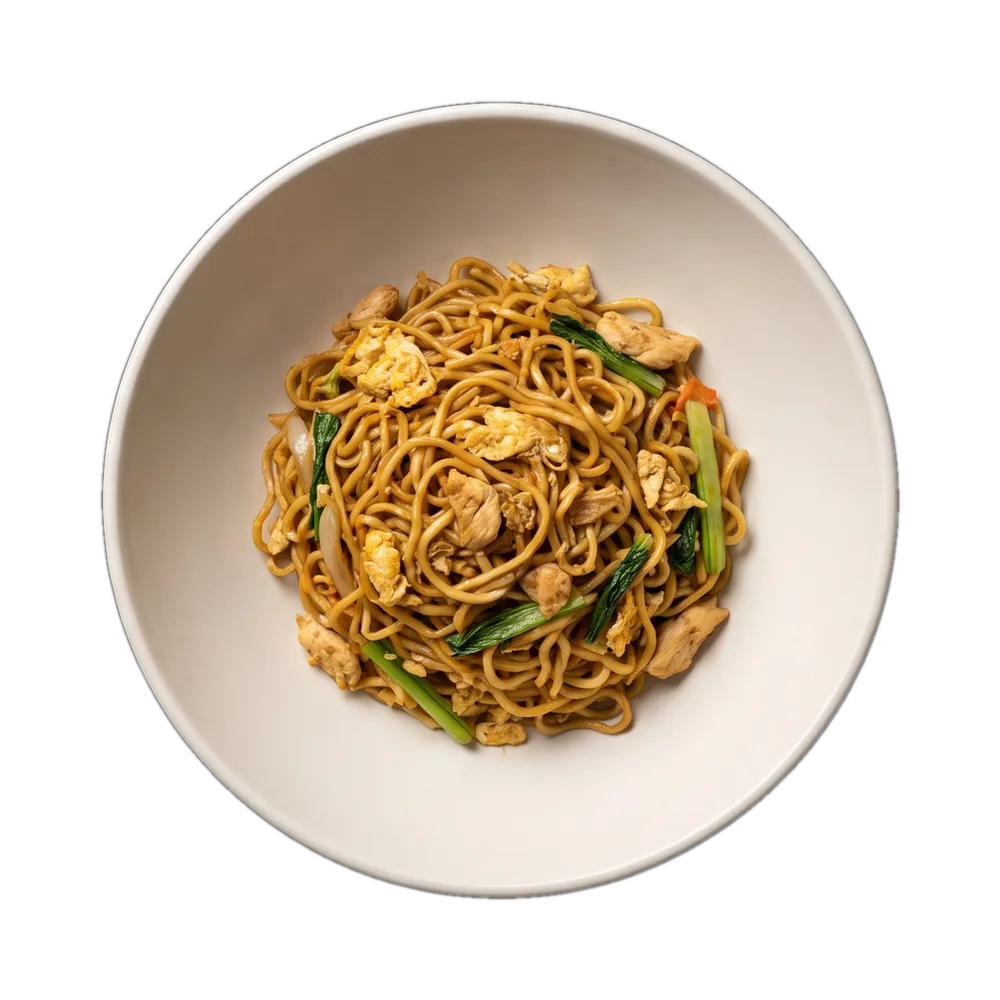
717kcal71.5g protein28.9g fat47.3g carbs*Estimates computed from the ingredient list; cost uses average US supermarket prices. Not a substitute for packaging measurements or your receipt.
Contains gluten, egg, sesame, soy, shellfish · only in an optional ingredient: peanut, tree nut
Restrictions
Containsgluten · egg · sesame · soy · shellfishIt is in an ingredient you cannot leave out.
Only if you add itpeanut (peanuts) · tree nut (candlenut)Leave that ingredient out and the dish does not have it.
Diets
No porkNo alcohol
Worked out from the ingredient list. It knows nothing about brands, shared equipment or cross contamination, and it is not a certification — if you have an allergy, you still have to read the label.
Ingredients
Servings:
| 1 lb | fresh yellow egg noodles |
| 8 oz | chicken thigh (boneless, sliced thin against the grain) |
| 8 oz | shrimp (peeled and deveined) |
| 3 unit | eggs (beaten with a pinch of salt) |
| 3 cup | cabbage (cored, shredded thin) |
| 1 ½ cup | bean sprouts (rinsed, drained dry) |
| 4 unit | scallions (cut into 2-inch lengths, whites and greens kept apart) |
| 4 clove | garlic (minced) |
| 3 unit | shallots (sliced paper-thin, for frying crisp) |
| 3 tbsp | kecap manis (Indonesian sweet soy syrup) |
| 2 tsp | light soy sauce |
| 2 tsp | dark soy sauce (for colour) |
| 1 tbsp | oyster sauce |
| 2 tbsp | tomato ketchup |
| 1 tsp | sambal oelek |
| 2 tsp | toasted sesame oil |
| ½ tsp | white pepper (finely ground) |
| 6 tbsp | neutral oil (for the wok and for crisping the shallots) |
| ½ tsp | salt |
| 2 unit | lime (cut into wedges, for the table) |
| 1 unit | cucumber (sliced, for the table) |
Optional
Not counted above. The dish works without them.
| 3 unit | candlenuts (toasted, pounded — Javanese bumbu branch) |
| ½ cup | chicken stock (reduced in the wok — Javanese bumbu branch) |
| 1 unit | potato (boiled, peeled, sliced thick — mamak branch) |
| 6 oz | firm tofu (cubed and pan-fried gold — mamak branch) |
| 8 unit | dried red chillies (soaked soft, blended to a paste — mamak sambal) |
| ½ cup | roasted peanuts (ground into the mamak sambal) |
| 2 tbsp | dried shrimp (soaked, ground into the mamak sambal) |
| 1 tbsp | tamarind paste (in the mamak sambal) |
| 1 unit | tomato (quartered — mamak branch) |
Steps
- mix3 minin a small bowl, before the wok goes on the heatkecap manis + light soy + dark soy + oyster sauce + ketchup + sambal oelek + sesame oil + white pepper, stirred smooth = the sauce, set beside the stove. Every source in the set does this first for the same reason: once the wok is hot the entire dish takes four minutes, and there is no point in it where you can stop and measure seven things. Kecap manis is a thick palm-sugar syrup, not a thin soy — it will not disperse if you dribble it into a moving pan, and you will end up with sweet patches and bare strands
- slice12 mineverything cut and grouped in bowls within reach of the stovechicken sliced thin against the grain + shrimp + cabbage shredded + sprouts rinsed and dried + scallions cut into lengths with whites and greens separated + garlic minced + shallots sliced paper-thin. This is not tidiness, it is the recipe. The cooking is shorter than the chopping, so anything still on the board when the pan is hot is a thing that will burn while you fetch it. Dry the sprouts properly — water carried in on them is water the wok has to boil off before it can fry anything
- boil3 minhard rolling water, pulled while still stiff in the middlethe egg noodles, cooked to roughly two-thirds done — one source cuts an eleven-minute package time to eight, and fresh noodles need barely a minute — then drained, rinsed cold and tossed with a teaspoon of the oil. The noodles cook a second time in the wok, so anything fully tender now finishes as paste. The cold rinse stops the carryover and the oil stops the strands welding into a single block while you fry the aromatics. Fresh noodles straight from the fridge clump hard; warm them briefly or work them apart with your fingers before they go in
- fry6 minmedium-low oil, rising to medium, stirred oftensliced shallots in 4 tbsp of the oil, started gently and lifted out the moment they turn pale gold and the bubbling slows — they darken for another twenty seconds off the heat, so pulling them at the colour you want means pulling them too late. Drain on paper and keep the shallot-flavoured oil in the wok; that infused fat is the base of the stir-fry and it is why this step comes first rather than being a garnish made separately
- saute2 minhigh heat, wok smoking, shallot oilgarlic + scallion whites, moved constantly for about twenty seconds until fragrant, then + chicken until the outside has just turned opaque, then + shrimp for thirty seconds until they have barely started to curl. Both come out underdone on purpose and will finish later in the sauce. Garlic in a smoking wok goes from fragrant to acrid in well under a minute, which is why it goes in with the protein rather than alone
- fry2 mineverything pushed to one side, fresh oil in the cleared spacebeaten eggs, poured into the bare metal and left completely still for twenty seconds to set before being broken into large curds and folded back through. Stirring immediately gives you fine yellow dust distributed through the noodles; leaving it alone gives you soft pieces you can actually see and taste. Do not cook them through — they will set the rest of the way in the residual heat
- caramelize3 minhighest heat available, tossing constantly, pan no more than half full+ shredded cabbage for under a minute, then + the drained noodles + the whole bowl of sauce, tossed hard until the strands go from streaked to an even glossy brown and you can smell the sugar catching on the metal. This is the step the dish is judged on and the one place it fails. The sauce is sugar-heavy and the noodles are wet, so an overloaded pan cannot get rid of that water fast enough: the temperature falls below frying range, the noodles sit in their own steam, and what should be a caramelised brown coat comes out pale, slack and gluey. If your wok is domestic, cook two servings at a time and do this twice — that is what stall cooks do, and it is not a shortcut you are missing. Keep it moving; the same sugar that browns will scorch black if a patch is left sitting
- season2 minstill on the heat, tasting between additions+ bean sprouts + scallion greens, tossed thirty seconds so they heat through but stay squeaky, then taste and adjust with more kecap manis for sweetness and colour, soy for salt, or sambal for heat. Kecap manis brands differ substantially in how sweet and how thick they are, and several sources say plainly to add more sauce rather than trust the written number. The target is sweet first, salty right behind it, with the sesame and white pepper audible underneath — flat means soy, cloying means a squeeze of the lime
- top1 minplated straight from the wok, uncoverednoodles + the fried shallots scattered over + lime wedges and sliced cucumber alongside = mie goreng. The shallots go on at the table because they soften within a minute of touching the hot noodles, and the lime is not decoration — the sauce is sweet and fatty, and the acid is what stops the fourth mouthful tasting like the first. Never cover the plated noodles to keep them warm: trapped steam collapses the coat you just spent three minutes building