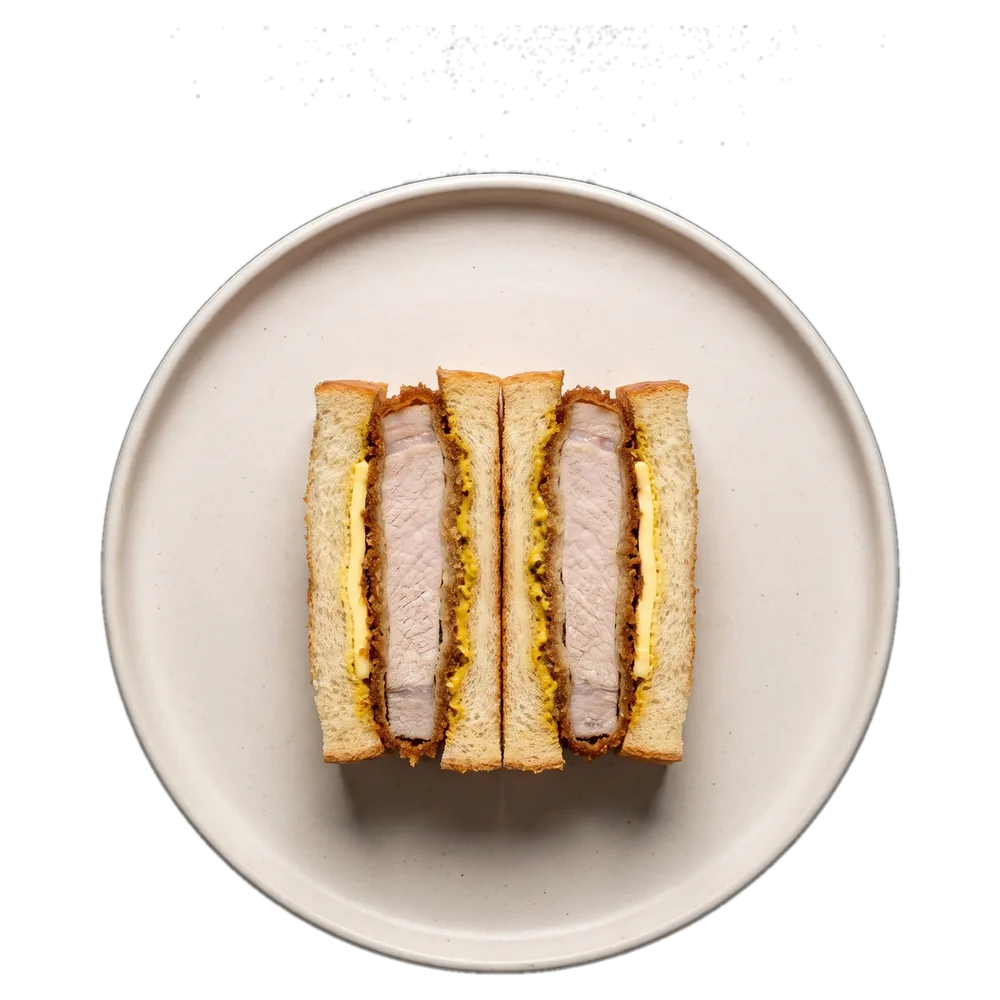
Katsu Sando
1093kcal67g protein85.1g fat12.6g carbs*Estimates computed from the ingredient list; cost uses average US supermarket prices. Not a substitute for packaging measurements or your receipt.
Contains gluten, dairy, egg · sometimes contains soy — check the label · only in an optional ingredient: sesame, fish
Restrictions
Containsgluten · dairy · eggIt is in an ingredient you cannot leave out.
Sometimes contains — check the labelsoy (Mayonnaise, tonkatsu sauce)Some brands have it, some do not. The recipe cannot tell, so this is the one you check yourself.
Only if you add itsesame (sesame seeds) · fish (worcestershire sauce)Leave that ingredient out and the dish does not have it.
Diets
No alcohol
Worked out from the ingredient list. It knows nothing about brands, shared equipment or cross contamination, and it is not a certification — if you have an allergy, you still have to read the label.
Ingredients
Servings:
| 1 lb | boneless pork loin chops (about 6 oz each) |
| 1 tsp | salt |
| ½ tsp | black pepper (ground) |
| ¼ cup | flour (all-purpose) |
| 1 unit | egg (beaten) |
| 1 cup | panko |
| 3 cup | neutral frying oil |
| 4 slice | shokupan, Japanese milk bread (thick-cut) |
| 2 tbsp | butter (softened) |
| 1 tsp | karashi, Japanese hot mustard (or Dijon) |
| 4 tbsp | tonkatsu sauce |
Optional
Not counted above. The dish works without them.
| 1 cup | cabbage (shredded as fine as you can manage) |
| 2 tbsp | Japanese mayonnaise (in the spread, or dressing the cabbage) |
| 1 tsp | rice vinegar (dressing the cabbage) |
| 2 ½ tbsp | Worcestershire sauce (homemade tonkatsu sauce) |
| 1 tbsp | ketchup (homemade tonkatsu sauce) |
| 1 tsp | honey (homemade tonkatsu sauce) |
| 1 tsp | sesame seeds (toasted and ground, into the sauce) |
| ½ tsp | garlic powder (seasoning the cutlet) |
Steps
- score5 minknife tip through the fat seam every inch, then pounded flatpork loin chops, with the pale band of sinew where fat meets muscle cut through at intervals along its whole length, then pounded between sheets of plastic to an even half inch and pressed back into a square roughly the footprint of the bread. The scoring is not decorative: that connective tissue contracts far more than muscle does in hot oil, and left intact it pulls the cutlet into a bowl that fries unevenly and will not sit flat in a sandwich. Even thickness is the other half — a cutlet that is three-quarters of an inch at one end and a quarter at the other cannot be cooked correctly at both, so one end is always dry
- season3 minboth faces, then left to sitflattened cutlets + salt + black pepper on both sides, left ten minutes before breading. Salt applied after the crumb never reaches the meat, and this is the last moment it can — the panko shell is about to become a sealed jacket. Season the pork, not the coating
- bread6 minthree shallow trays; panko pressed on, not sprinkledcutlet dragged through flour and every excess speck knocked off, then through beaten egg and allowed to drain a moment, then laid in panko and buried, with crumbs pressed firmly onto both faces and the edges. The three stages each do one job: flour gives the smooth wet meat something dry to grip, egg is the glue, panko is the crust. Excess flour is the usual failure — a thick dusting turns to paste under the egg and the whole shell slides off in the oil as one sheet. Press the panko rather than shaking it on; contact is what makes it stay
- rest30 minuncovered on a rack in the refrigeratorbreaded cutlets, chilled before frying. The flour under the egg hydrates into a continuous glue layer, and the surface dries slightly — both make the coating far less likely to blister away from the meat in the pot. It also brings the cutlet's shape to a set, which matters because a cold, firm cutlet holds the square you pressed it into. This is documented as optional and it is genuinely worth the half hour
- fry8 min340°F, one cutlet at a time, 3 to 4 minutes a side, to 145°F insidebreaded cutlets, lowered away from you into oil held around 340°F and turned once, cooked to an internal 145°F rather than to a colour you like. Temperature is the target because pork loin is lean and has a narrow window — a few degrees past done and it is dry, with no fat to disguise it. Below about 320°F the crust drinks oil instead of sealing and the sando is greasy; above about 360°F the panko is dark before the centre is warm. One at a time is not fussiness: two cold cutlets drop a home pot straight out of that range
- rest5 minon a wire rack, never on paper or a platethe fried cutlets, stood on a rack with air underneath. The interior carries on cooking for a few degrees off the heat, and more importantly the crust is still full of steam — set the cutlet on a plate or a paper towel and that steam is trapped against the underside, which goes soft in under a minute. This rest is also what keeps the bread dry later, since a cutlet that goes onto shokupan straight from the pot condenses into it
- mix2 mincreamed smooth, butter at room temperaturesoftened butter + karashi, worked together until uniform = the spread. Karashi is a hot, sharp Japanese mustard and half a teaspoon per sandwich is assertive; Dijon is the reasonable substitute and Japanese mayonnaise is the third documented route. Cold butter is the failure here — it tears the soft crumb of milk bread instead of spreading over it, and torn bread cannot form a continuous barrier
- top4 minspread to every corner, sauce on the cutlet onlyshokupan slices + the karashi butter taken right out to the edges and into the corners of each slice, then rested cutlet + tonkatsu sauce spooned over it, closed with the second slice. The fat layer is structural and the sources are unanimous about it: it is a moisture barrier, and any square millimetre you leave bare is where the sauce reaches the crumb and turns it to pulp. Sauce the cutlet rather than the bread for the same reason. Shokupan is specified because it is soft, tight-crumbed and slightly sweet — a good white sandwich loaf is the substitute, and anything crusty or open-textured fights the cutlet instead of yielding to it
- rest5 minunder a flat plate or board, light weight onlythe closed sandwich, pressed gently under something flat. This is the step that separates a katsu sando from a pork sandwich: pressing compacts the layers into a single slab so the crumb grips the crust, and a pressed sandwich cuts to a clean cross-section instead of skidding apart. Light weight and a few minutes — real force squeezes the sauce out at the edges and crushes the crumb into a dense sheet
- slice2 mincrusts trimmed, one long serrated knife, wiped between cutspressed sandwich, crusts cut away on all four sides and the sandwich halved in a single sawing pass. Trim the crusts after pressing, not before — the crust holds the sandwich square while it is under weight. Let the knife's teeth do the work in long strokes; pushing straight down drives the top slice into the cutlet and squeezes the filling out of the cut face, which is exactly the face this sandwich is served on. Wipe the blade between cuts or the sauce smears across the section