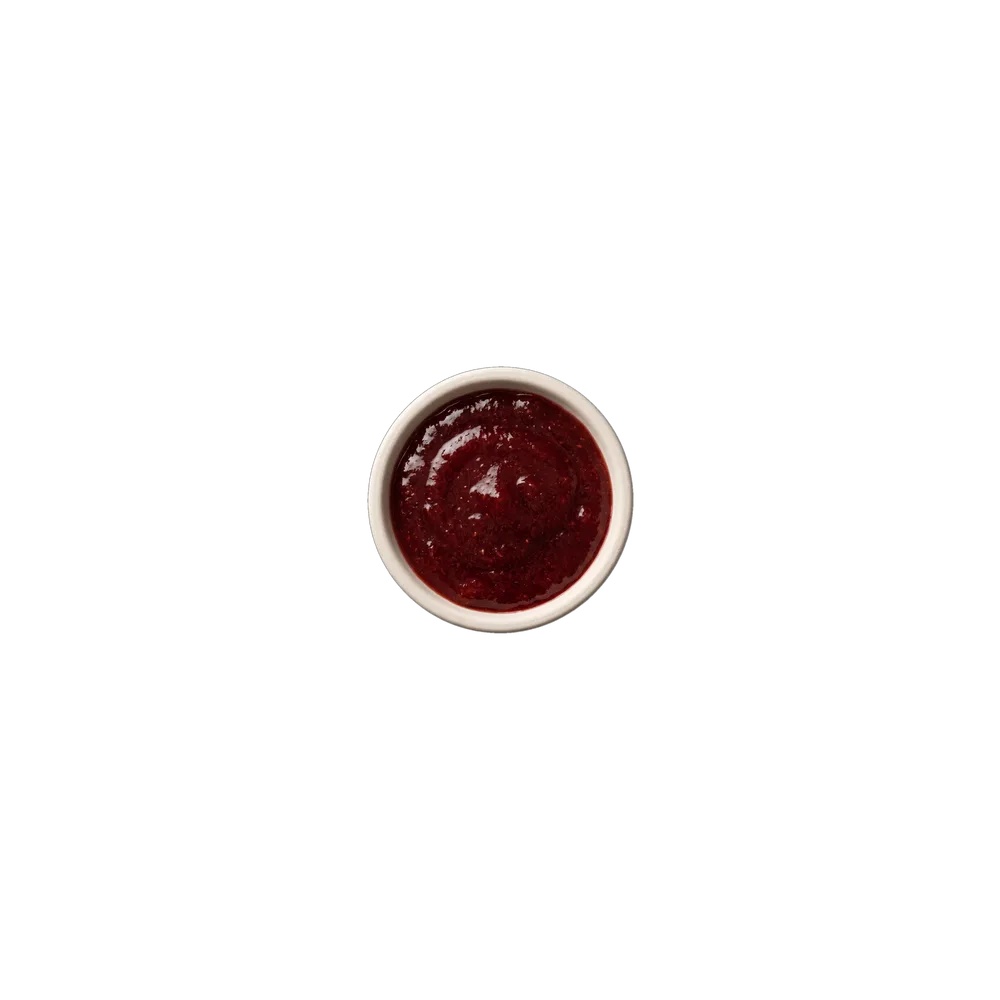
Strawberry Jam
2329kcal0.1g protein0.1g fat602.1g carbs*Estimates computed from the ingredient list; cost uses average US supermarket prices. Not a substitute for packaging measurements or your receipt.
only in an optional ingredient: dairy
Restrictions
Only if you add itdairy (butter)Leave that ingredient out and the dish does not have it.
Diets
VegetarianVegan · without onePescatarianNo porkNo alcohol · check
Worked out from the ingredient list. It knows nothing about brands, shared equipment or cross contamination, and it is not a certification — if you have an allergy, you still have to read the label.
Ingredients
Servings:
| 2 kg | strawberries (hulled and weighed after hulling) |
| 1 kg | granulated sugar (60% of the hulled fruit weight) |
| 4 tbsp | lemon (juice, about 4 tbsp) |
Optional
Not counted above. The dish works without them.
| ½ tsp | butter (a knob to suppress foam) |
| 50 g | powdered pectin (for the fast added-pectin variation, with more sugar) |
| 1 unit | vanilla (a split pod cooked with the fruit, removed before jarring) |
Steps
- weigh20 mindigital scale, tared bowl, fruit weighed AFTER hullingstrawberries, hulled and weighed, then sugar weighed to 60 percent of that number — 2 kg of fruit takes 1.2 kg of sugar. The scale is the recipe, not a nicety. Crushed berries pack into a cup measure at wildly different densities depending on how ripe they are and how hard they were mashed, so a cup of fruit can vary by a third in actual mass, and the gel depends on the ratio of sugar to real fruit weight rather than to volume. Weighing after hulling matters for the same reason: hulls are 5 to 10 percent of a punnet and vary by variety. Sugar here is structural — it competes with pectin for water and lets the pectin chains bond to each other instead — as well as preservative, so this proportion is not a sweetness preference and cannot be cut without switching to a pectin that works differently
- mash10 minpotato masher, in layers, deliberately unevenhulled berries + sugar + lemon juice, crushed in layers so some fruit stays in pieces. Do not blend or purée: a smooth fruit slurry has no texture left to lose over an hour of boiling, and it also traps steam, so it spits violently and scorches on the bottom long before it concentrates. The lemon juice goes in now rather than at the end because pectin needs an acidic environment — around pH 3 — to shed the negative charges that keep the chains apart, and strawberries are among the least acidic jam fruits there are. Jam that will not set is far more often short of acid than short of sugar. To make the European-style version, stop here and let the fruit macerate covered for a few hours or overnight; the sugar draws the juice out, which shortens the boil and preserves more fruit shape
- boil10 minwide heavy pan no more than a third full, stirred until the sugar dissolvesfruit + sugar, brought up over medium heat, stirred constantly until no grain of sugar can be felt on the bottom of the pan, and only then raised to a full boil. Undissolved sugar on a hot pan base caramelizes and then burns, and once there is a scorched layer the whole batch tastes of it. Use the widest heavy pan you own — surface area is the only thing that controls how fast this cooks — and keep it under a third full, because sugar syrup foams to several times its volume the moment it reaches a rolling boil. A half-teaspoon of butter breaks the surface tension and largely suppresses that foam; without it, skim
- reduce50 minrolling boil, stirred often, to 220°F / 104°C — confirmed on a frozen platejam, boiled hard and stirred often to keep the bottom moving, until a thermometer clipped clear of the pan base reads 220°F. That number is not a temperature the jam needs to reach so much as a measurement of how much water has left: as sugar concentrates, the boiling point rises predictably, so 220°F at sea level means roughly the 65 percent sugar concentration at which pectin gels. Subtract about a degree per 500 feet of elevation, because water boils cooler up there and 220°F may never arrive. Confirm with the frozen-plate test rather than trusting the thermometer alone — put a smear on a plate from the freezer, wait 30 seconds, and push it with a fingertip: it should wrinkle and hold its edge, not flood back. A jam that runs needs a few more minutes; a jam boiled well past this point sets into rubber and tastes cooked. Stop as soon as it wrinkles
- can20 minboiling-water canner, 1/4 inch headspace, jars covered by 1 inch, 10 minuteshot jam ladled into hot half-pint jars to a quarter inch of headspace, rims wiped clean, lids seated and rings turned to fingertip tight, then lowered into water already at a full boil and processed 10 minutes from the moment the boil returns. This step is what makes the jars shelf-stable rather than refrigerator jam, and each part of it is load-bearing: the quarter-inch headspace is small enough to evacuate and pull a vacuum, the wiped rim is what the lid actually seals against — one drip of jam under it and the seal fails — and the fingertip-tight ring lets air vent out during processing instead of buckling the lid. Cover the jars by at least an inch of water so the tops process as thoroughly as the bottoms. Add a minute per 1,000 feet of elevation. Five minutes is enough only into jars that were pre-sterilized; ten is the number for clean jars, which is what most cooks actually have
- store10 minundisturbed 12 to 24 hours, rings removed, cool and darkjars lifted out level onto a towel and left completely alone overnight — the vacuum forms as the contents cool and contract, and pressing a lid or moving a jar mid-seal breaks it. Then take the rings off and check each lid: concave, immovable, and strong enough to lift the full jar by. Any jar that flexes goes in the refrigerator. Note that the gel keeps setting for a day or two after the jars cool, so a jam that looks loose the next morning is often simply not finished — judge it at 48 hours, not at breakfast. Sealed jars keep about a year in the dark; an unprocessed refrigerator batch keeps about two weeks and is not shelf-stable, whatever it looks like