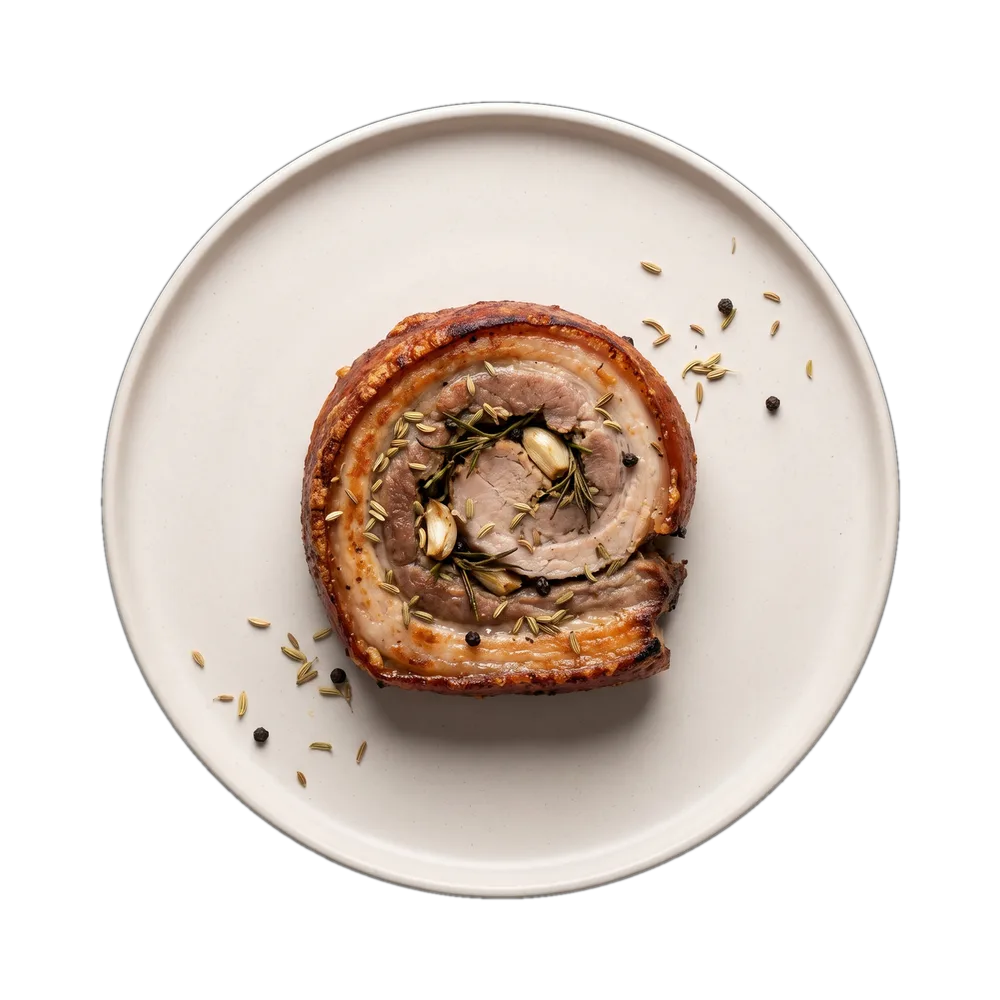
Porchetta
only in an optional ingredient: gluten, dairy, tree nut
Restrictions
Only if you add itgluten (breadcrumbs) · dairy (cheese parmesan) · tree nut (pine nuts)Leave that ingredient out and the dish does not have it.
Diets
No alcohol
Worked out from the ingredient list. It knows nothing about brands, shared equipment or cross contamination, and it is not a certification — if you have an allergy, you still have to read the label.
Ingredients
Servings:
| 3 kg | pork belly, skin on, in one rectangular slab |
| 1 kg | pork loin, trimmed, to fit the length of the belly |
| 3 tbsp | fennel seed (toasted and coarsely ground) |
| 2 tbsp | rosemary (leaves, finely chopped) |
| 10 clove | garlic (peeled, crushed to a paste) |
| 2 tbsp | black peppercorns (toasted and coarsely ground) |
| 1 tsp | red pepper flakes |
| 2 tbsp | salt (for the paste, plus more for the skin) |
| 3 tbsp | olive oil (for the paste and for oiling the skin) |
Optional
Not counted above. The dish works without them.
| 2 tbsp | sage (leaves, chopped, in the paste) |
| 1 tbsp | thyme (leaves, in the paste) |
| 1 unit | lemon (zest, in the paste) |
| 1 cup | breadcrumbs (for the stuffed variation) |
| ¼ cup | pine nuts (toasted, for the stuffed variation) |
| ½ cup | parmesan (grated, for the stuffed variation) |
| 1 tsp | baking powder (rubbed into the skin salt to speed browning) |
Steps
- score20 minbelly skin-side down first, then skin-side up; knife tip onlypork belly, laid flat and crosshatched on the meat side about a quarter inch deep so the paste has somewhere to go — an unscored belly takes seasoning only on its surface, and once rolled that surface is a single seam in the middle of an otherwise bland roast. Then turn it and score the skin in a diamond pattern with strokes about an inch apart, cutting through the skin and into the fat but stopping short of the meat. Cut into the meat and the roast leaks: rendered fat and juice escape through the breach onto the skin, and wet skin does not crackle. Trim the loin to the belly's length so the roll ends up an even cylinder rather than a cone
- season15 minflesh side only; skin wiped clean and left completely baretoasted fennel + peppercorns ground coarse + garlic + rosemary + salt + a little olive oil, worked into the scored flesh and into the loin on all sides. Toast the whole spices first: fennel's aroma sits in volatile oils that dry heat drives to the surface, and untoasted seed ground into a paste tastes flatly of liquorice. Keep every trace off the skin and wipe any smear away. This is not fussiness — salt, oil and moisture on the skin are exactly what stop it drying, and a paste on the outside will scorch into bitter black specks at 475°F. Leave a bare margin of about two inches along the far long edge so the seam seals against itself instead of squeezing filling out
- truss25 minbutcher's twine, ties 1 inch apart, middle first then ends then the gapsseasoned belly rolled tight around the loin from the near long edge, seam underneath, then bound. The twine here is a cooking control and not decoration, and it is doing three separate jobs: it holds the roll closed against fat that will liquefy and try to open the seam over four hours; it forces an even diameter so the middle and the ends reach temperature at the same time; and it keeps the log from slumping into an oval, which would put one flank of skin against the pan where it steams instead of crisping. Tie the middle first, then each end, then halve the remaining gaps — going from one end to the other pushes slack ahead of the knife and leaves the last section loose. Pull each tie snug enough that the twine dents the flesh, no tighter; overtightening extrudes the paste out of the ends and squeezes the loin off-centre. Ten to sixteen ties for a roast this size. Run a long skewer through near each end if the ends gape
- rest720 minuncovered, on a rack, refrigerated overnight (up to 3 days)tied roast, seam-side down on a rack over a tray, left uncovered in the refrigerator. This is the step that decides whether there is crackling at all, and skipping it cannot be compensated for later. Crackling forms when water in the skin flashes to steam and puffs the collagen matrix; skin that is still damp spends the high-heat stage evaporating surface water at 212°F instead of blistering, and comes out chewy and pale. A refrigerator is a dehumidifier with a light in it, so overnight uncovered air-drying pulls the skin taut and slightly translucent. Do not cover it, do not wrap it, and do not stand it in its own drippings
- roast150 min275°F / 135°C, on a rack, until the centre reads 150°F / 65°Croast, into a low oven, and left alone. Low and long is doing chemistry that a hot oven cannot: the belly's fat and collagen need hours in the 160 to 190°F range to render and gelatinize, and that is the difference between soft, silky belly and rubbery fat with meat around it. The loin in the middle is the constraint on the other side — it is lean, it has no collagen to speak of, and past about 155°F it goes dry and chalky. Pull at 150°F in the centre of the loin, measured at the thickest point, not in the belly. Do not tent it, do not baste it with anything wet, and do not open the door hourly; the goal for the next stage is the driest skin in the building
- roast25 min475°F / 245°C, watched constantly, rotated onceroast, rubbed with a film of oil and a scatter of salt, back into a fully preheated hot oven until the skin blisters into crackling across the whole surface. The two stages exist because they want opposite things: fat renders slowly at low temperature and skin blisters only at high, and an oven cannot do both at once. It happens fast and unevenly — the skin will inflate in patches, and the patches that have not gone are simply thicker there — so rotate once and pull the moment the last dull area comes up rather than waiting for uniformity. Twenty minutes past done is the difference between crackling and carbon, and this is the one step in a nineteen-hour recipe that cannot be left unattended
- rest25 minon a board, uncovered, 20 to 30 minutesroast, stood uncovered while the juices in the loin redistribute — a lean muscle pulled at 150°F has a real internal temperature gradient, and cutting immediately empties it onto the board. Uncovered is deliberate and non-negotiable here: foil traps steam against the skin and will soften two hours of crackling back to leather in about ten minutes
- slice10 minserrated knife, twine cut away one ring ahead of the bladerested roast, cut into rounds about half an inch thick. Use a serrated blade and a sawing stroke: a straight chef's knife pressed down through hard crackling shatters it and compresses the soft belly underneath, so the slice arrives as debris. Cut the twine off only one or two rings ahead of where you are cutting, so the rest of the log stays bound and holds its shape on the board