Sunomono
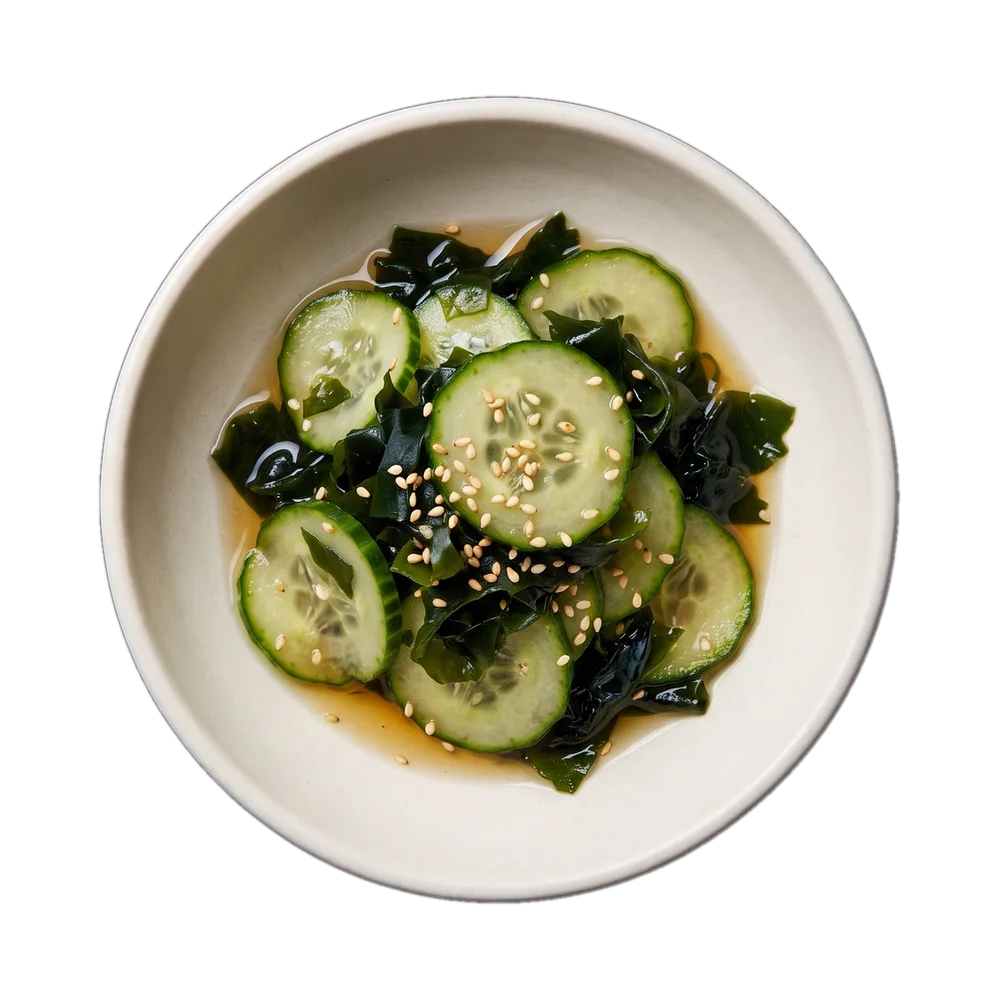
107kcal2.6g protein1.4g fat23.9g carbs*Estimates computed from the ingredient list; cost uses average US supermarket prices. Not a substitute for packaging measurements or your receipt.
Contains sesame, soy · usually contains gluten · only in an optional ingredient: shellfish, fish
Restrictions
Containssesame · soyIt is in an ingredient you cannot leave out.
Usually containsgluten (soy sauce → Tamari)The usual version has it. One without it exists — it is the one named here.
Only if you add itshellfish (crab, shrimp) · fish (dashi)Leave that ingredient out and the dish does not have it.
Diets
Vegetarian · without oneVegan · without onePescatarianNo porkNo alcohol · without one
Worked out from the ingredient list. It knows nothing about brands, shared equipment or cross contamination, and it is not a certification — if you have an allergy, you still have to read the label.
Ingredients
Servings:
| 2 unit | Japanese or Persian cucumbers (thin-skinned) |
| 1 tsp | salt (for drawing the water out) |
| 1 tbsp | dried wakame |
| 2 cup | water (cool, to rehydrate the wakame) |
| 4 tbsp | unseasoned rice vinegar |
| 2 tbsp | sugar |
| ½ tsp | salt (in the dressing) |
| ½ tsp | soy sauce |
| ½ tbsp | sesame seeds (toasted) |
Optional
Not counted above. The dish works without them.
| 2 tsp | mirin (the mirin-and-light-soy dressing family, in place of the sugar) |
| 1 tbsp | dashi (for depth in the dressing) |
| 8 oz | crab or imitation crab (shredded — a named version) |
| 8 oz | small shrimp (cooked and cooled — a named version) |
| 2 oz | bean-thread noodles (soaked and cut — a named version) |
| 1 tsp | ginger (finely julienned) |
Steps
- slice6 min2 mm rounds — a dime's thickness — with a keen knife, or a mandoline set thin but NOT at its finestcucumbers into even rounds, after peeling the skin away in lengthwise stripes if you want the striped shima-muki look, which also lets a little of the skin's bitterness out. Two millimetres is the target because that is thin enough for the vinegar to penetrate the whole slice and still leave it stiff enough to snap; a thick round never takes up the dressing, stays watery in the middle and tastes of almost nothing. The edge decides this. Cucumber exposes a dull blade more plainly than any other vegetable — a blunt edge crushes and tears the round rather than parting it, so the slice comes off the knife ragged and already weeping, and a torn round cannot survive the squeeze this recipe depends on. The finest mandoline setting causes the same failure from the other direction: slices that fine disintegrate in the hand. If the blade is skidding across the skin instead of dropping through it, that is the problem, not your technique.
- season7 min1 tsp salt massaged through, left 5 to 10 minutes until translucent and slumpedsliced cucumber + salt, tossed and rubbed with the fingers so every round is coated, then left alone. The salt raises the solute concentration outside the cell walls and water leaves the cucumber by osmosis to meet it — that is why the slices go glassy and lose their rigidity, and it is why they end up firmer rather than softer once the water is gone. Watch for the colour change: opaque green to translucent is the signal that the step has worked.
- prep3 minsqueezed firmly by hand, a small handful at a timegather the salted slices in the palm and press hard enough to run liquid out between the fingers, working in handfuls rather than one mass. Skipping this is the single most common way sunomono fails, and the failure is delayed rather than immediate: the water you leave in the cucumber comes out over the next twenty minutes, into the dressing, which arrives at the table thin and pale while the slices sit limp in a puddle. Rinsing before squeezing is optional and sources split on it — rinse and you remove salt the dressing was already accounting for, so taste before adding the dressing's own half teaspoon.
- rest8 mindried wakame submerged in cool water, then squeezed dry the same waywakame + cool water, left 5 to 10 minutes until fully unfurled and tender, then drained and pressed out. Dried wakame swells eight or ten times over, so a single tablespoon that looks like a scattering of black flakes becomes a real handful of green — measure it dry and resist the urge to add more. It is squeezed for exactly the reason the cucumber is: soaked seaweed carries a surprising amount of water and it will dilute the dressing just as effectively.
- mix3 minwarmed only enough to dissolve the sugar, then cooled to room temperaturerice vinegar + sugar + salt + soy sauce, stirred over the barest heat until no crystals are left, then taken off and cooled = amazu. Learn this as a ratio and not a list: equal volumes of vinegar and sugar, with salt and soy as accents, and it scales to any bowl. Use unseasoned rice vinegar — seasoned rice vinegar already carries its own sugar and salt, and it will throw the ratio off in both directions at once. Cool the dressing before it meets the cucumber; warm amazu wilts the slices you just spent three steps keeping crisp.
- top2 mintossed and dressed within a few minutes of servingsqueezed cucumber + wakame + cooled amazu, turned over lightly, then + toasted sesame seeds scattered over. Dress it late. Even properly squeezed cucumber keeps giving up water for as long as it sits in an acidic dressing, so the salad is at its best in its first ten minutes and slowly loses definition after that. Serve it cold, in a small deep bowl with some of the dressing spooned over rather than drained off — the liquid is part of the dish and is drunk from the bowl.