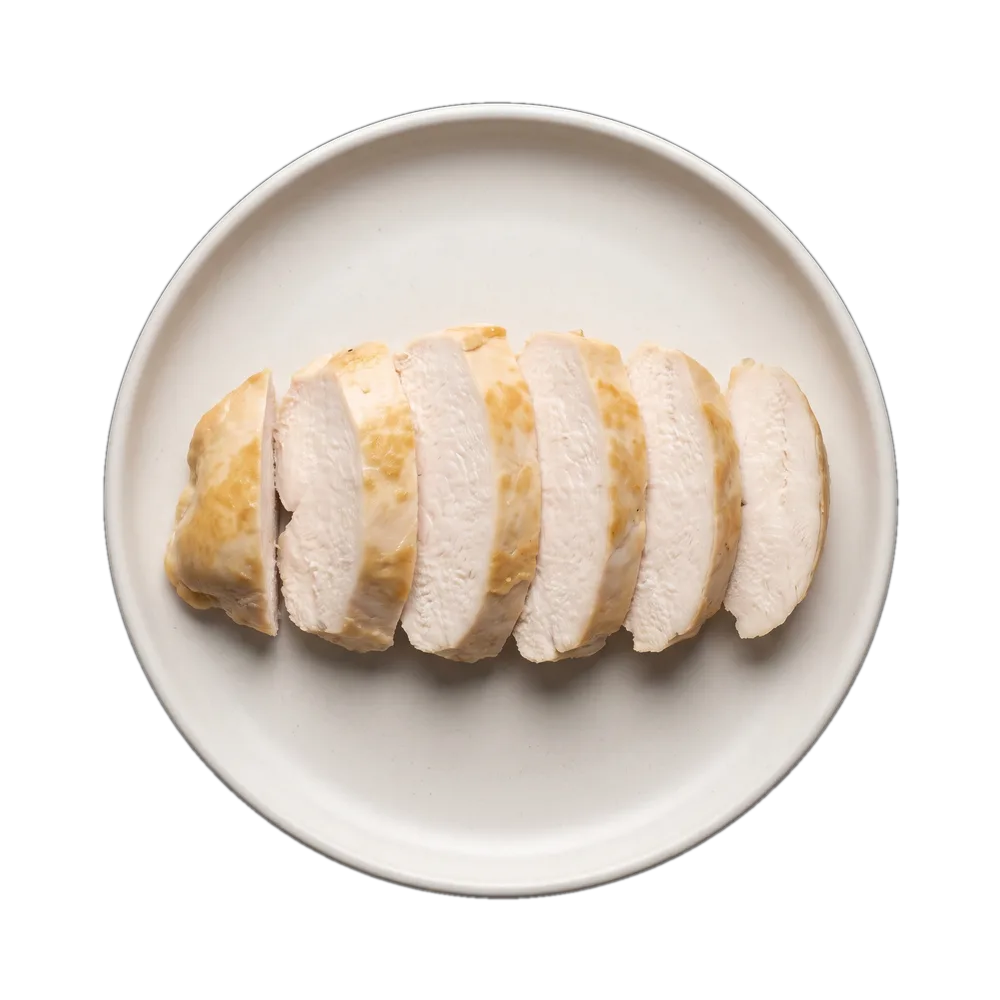
Sous Vide Chicken Breast
only in an optional ingredient: dairy
Restrictions
Only if you add itdairy (butter)Leave that ingredient out and the dish does not have it.
Diets
No porkNo alcohol
Worked out from the ingredient list. It knows nothing about brands, shared equipment or cross contamination, and it is not a certification — if you have an allergy, you still have to read the label.
Ingredients
Servings:
| 4 unit | chicken breast, boneless and skinless |
| 2 tsp | salt, kosher |
| 1 tsp | black pepper (ground) |
| 1 tbsp | neutral oil (for the optional sear) |
Optional
Not counted above. The dish works without them.
| 4 tbsp | butter (1 tbsp per bag) |
| 4 sprig | thyme (1 sprig per bag) |
| 4 clove | garlic (roasted, never raw, in the bag) |
| 1 unit | lemon (zest and juice, added after the bag is opened) |
| 1 tsp | paprika, smoked (in a dry rub applied before bagging) |
Steps
- season10 minroom temperature, one breast per bagchicken breast + salt + pepper on both faces, then sealed with the air displaced, one to a bag and laid flat. Pound or press a tapering breast to an even thickness first: the bath cooks by conduction from the outside in, so an uneven breast has a thin end that is already soft while the thick end is still climbing, and thickness is the only variable that changes the time. Butter and a thyme sprig can go in now. Roasted garlic is safe here; raw garlic is not, because a sealed oxygen-poor bag held for hours at 145°F is the specific environment botulinum spores are waiting for
- sous-vide120 minbath held at 145°F / 63°C, bags flat and submerged, 1 to 4 hours — never longerbagged breasts, lowered into a bath already at temperature and left. This is the step that fixes the cut, and the reason it works is worth stating plainly because a reader who half-believes it will ruin the recipe by 'finishing' the chicken in a pan: 165°F is the temperature at which salmonella dies instantly, and it is not the only temperature at which it dies. Holding 145°F for a few minutes achieves the identical reduction — the pair of time and temperature is the standard, not the number alone — so a two-hour hold clears the safety bar by an enormous margin while the muscle fibres never contract hard enough to squeeze out their water. That contraction, not the microbiology, is what makes 165°F chicken dry. Four hours is a hard ceiling, not a suggestion: past it the proteins keep breaking down and the texture goes from tender to mushy, and there is no recovering it. Add an hour from frozen. Keep bags in one layer and fully submerged; anything insulated or above the waterline is neither cooked nor pasteurized
- prep4 minout of the bag, paper towels, both facescooked breast, patted thoroughly dry, and do not be alarmed by what comes out of the bag — pale, faintly translucent, softer than expected, sitting in a little cloudy liquid is exactly correct at 145°F and is not undercooked meat. Reserve that liquid; it is concentrated chicken jus and belongs in the pan sauce or spooned back over the slices. The drying matters for the same reason it does on steak: the surface is at 100 percent humidity, and water boiling off holds it at 212°F while browning needs roughly 300°F, so a wet breast will grey before it browns
- sear2 minoptional; moderate heat, 30 to 60 seconds per sidedried breast + a film of oil in a moderately hot pan, briefly, for colour only. Moderate rather than smoking is the instruction here and it differs from steak on purpose: the breast is already fully cooked all the way through, so a screaming pan has nothing to gain and will drive a firm overcooked band inward from the surface, undoing the evenness the bath just bought. Skip this step entirely for chicken that will be sliced cold into salads or sandwiches — several of the sources do, and a browned crust is worth nothing once the meat is chilled
- store4 minsealed bags, refrigerated up to 3 days or frozen rawcooked breasts left in their sealed unopened bags and chilled quickly in ice water, then refrigerated — they keep about three days and reheat in a 140°F bath without cooking further, which is the practical payoff of a method where the bath temperature is the doneness. The other batching route runs the other way: season and seal the raw breasts, then freeze the bags flat and cook them straight from frozen with an extra hour. Do not chill a cooked bag slowly on the counter; the 40°F to 140°F band is where anything that survived is free to multiply, and a two-hour hold at 145°F does not sterilize the meat, it pasteurizes it