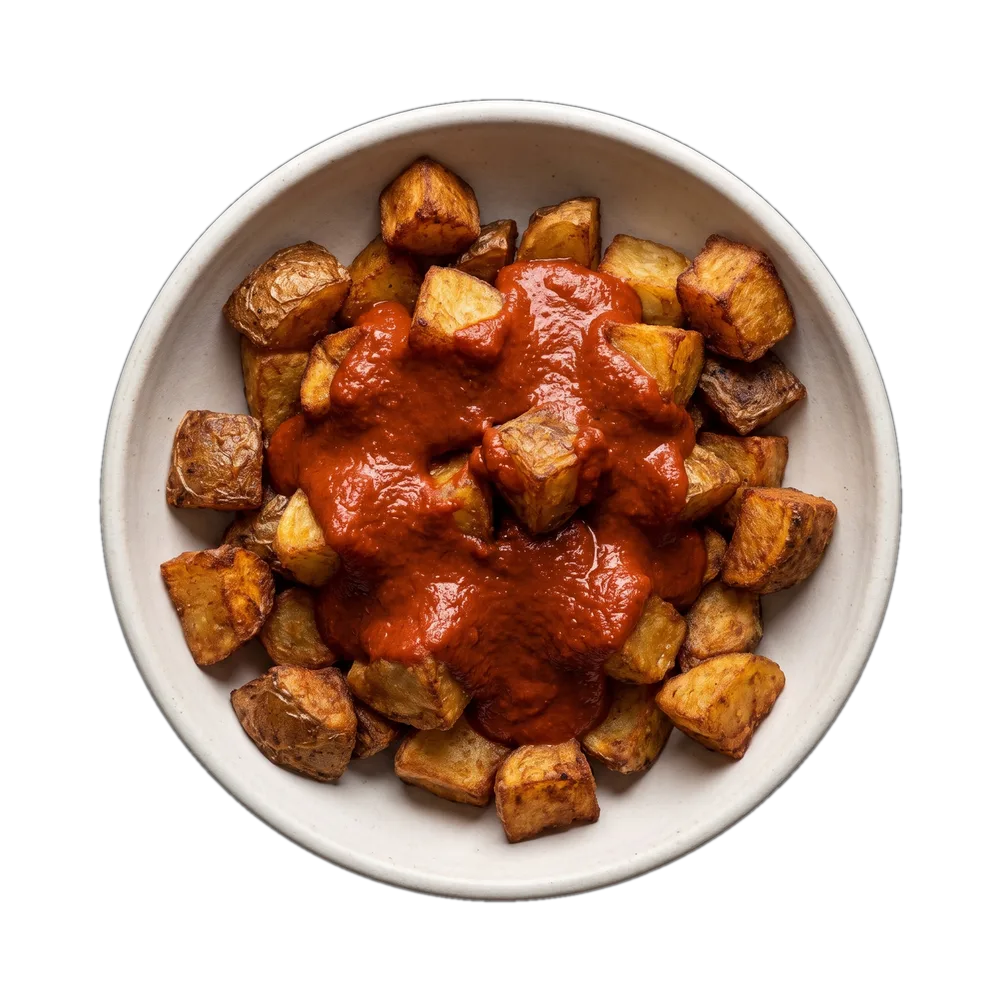
Patatas Bravas
1022kcal12.3g protein67.1g fat99.3g carbs*Estimates computed from the ingredient list; cost uses average US supermarket prices. Not a substitute for packaging measurements or your receipt.
sometimes contains soy — check the label · only in an optional ingredient: gluten, egg
Restrictions
Sometimes contains — check the labelsoy (Mayonnaise)Some brands have it, some do not. The recipe cannot tell, so this is the one you check yourself.
Only if you add itgluten (flour) · egg (Mayonnaise)Leave that ingredient out and the dish does not have it.
Diets
Vegetarian · without oneVegan · without onePescatarian · without oneNo porkNo alcohol
Worked out from the ingredient list. It knows nothing about brands, shared equipment or cross contamination, and it is not a certification — if you have an allergy, you still have to read the label.
Ingredients
Servings:
| 2 lb | russet potatoes (peeled, cut into 1½-inch chunks) |
| ¾ tsp | baking soda (for the boiling water) |
| 1 tbsp | salt (for the boiling water, plus more to finish) |
| 4 cup | neutral oil (for deep-frying) |
| 2 tbsp | olive oil (for the sauce) |
| 1 unit | onion (finely diced) |
| 3 clove | garlic (minced) |
| 2 tsp | smoked paprika |
| ¼ tsp | cayenne pepper |
| 14 oz | canned diced tomatoes (with their juice) |
| 1 tsp | sugar |
| 2 tbsp | white wine vinegar |
| ½ tsp | black pepper (ground) |
Optional
Not counted above. The dish works without them.
| ½ cup | mayonnaise (quick alioli) |
| 1 clove | garlic (grated, for the alioli) |
| 1 tbsp | lemon (juice, for the alioli) |
| 1 tbsp | flour (traditional Spanish flour-and-broth sauce branch) |
| 1 cup | chicken stock (traditional Spanish flour-and-broth sauce branch) |
| 1 tsp | sweet paprika (traditional Spanish sauce branch) |
| 1 tbsp | parsley (chopped, to finish) |
Steps
- boil4 minhard boil, salted water with baking soda, 1 to 2 minutes onlypotato chunks + boiling water + baking soda + salt, boiled just long enough for the outermost layer to give. The soda makes the water alkaline, which breaks down pectin at the surface and frees a slurry of starch that clings to the outside of each piece — that slurry is what the crust is made of. Ordinary boiling water gives you a smooth surface with nothing to crisp. Stop at two minutes: taken to fork-tender the pieces are too fragile to move into hot oil without breaking, and broken potatoes shed starch into the fat and burn it
- rest10 mindrained into a colander, shaken hard, spread out to steam-dryboiled potatoes, drained and then jiggled roughly in the colander so the softened outsides scuff up into a rough starchy coating, then spread in a single layer until the surfaces stop steaming and look matte and chalky. Two things are happening: the roughening adds surface area for the crust, and the drying removes the water that would otherwise flash to steam and spit violently in the fryer. Wet potatoes do not brown — the oil has to boil the water off before the surface can get above 212°F, and by then the inside is overcooked
- saute8 minmedium heat, olive oil, until soft and translucentolive oil + onion + garlic, cooked gently until the onion is soft and sweet with no colour on it. Browning is wrong here: the sauce should taste of smoked paprika, and caramelised onion competes with it. Garlic goes in near the end of the eight minutes so it softens without scorching
- simmer20 minlow, uncovered, then blended smooth+ smoked paprika + cayenne stirred into the hot oil for about 30 seconds, then + canned tomatoes + sugar + white wine vinegar + black pepper, simmered until it thickens and darkens = salsa brava. Bloom the paprika in the fat before the tomatoes go in — paprika is oil-soluble and stirred into a wet pan it stays dusty and tastes of nothing but red. The vinegar is structural, not a seasoning flourish: canned tomatoes and the sugar together read cloying, and the acid is what makes the sauce cut through fried potato instead of sitting on it. Blend smooth, or leave it chunky if you prefer. It keeps three days refrigerated and is better made ahead
- fry7 min300°F / 150°C, in batches, no crowdingdried potato chunks, lowered into moderate oil and cooked until they are tender all the way to the centre but still pale — no colour yet. The first pass is about cooking, not browning: it drives moisture out of the interior and sets the surface, and doing that at a low temperature means the outside is not already dark by the time the middle is done. Fry in batches so the oil stays near temperature; a full basket of cold potato drops it a hundred degrees and the pieces poach in fat instead of frying
- rest45 minspread on a rack, uncovered, until completely coolthe first-fry potatoes, left alone to cool right down. This wait is doing real work: steam escaping from the interior dries the surface further, and the starch on the outside sets into a firm shell that will fracture and blister in the second fry. Going straight back into hot oil while they are still warm gives a crust that is thinner and softens within a minute of hitting the plate. They can sit up to an hour, which makes this the point to walk away and make the sauce
- fry5 min370°F / 188°C, in batches, until deep gold and blisteredthe cooled potatoes, returned to hot oil for three to five minutes until the outsides are deep gold, rough and audibly crisp. The interior is already cooked, so this pass exists only to dehydrate and brown the shell — which is why the oil must be genuinely hot and why the potatoes come out the moment the colour is right rather than by a timer
- season1 minstraight out of the oil, onto paper, salted immediatelyfried potatoes + salt, tossed while the surface still carries a film of hot oil. Salt sticks to hot fat and bounces off cold; a minute of waiting and it ends up on the plate instead of on the potato. Do not cover them or pile them deep — trapped steam collapses the crust you just spent an hour and a half building
- top2 minsauce spooned over at the table, immediately before eatinghot potatoes + salsa brava spooned over, with alioli alongside if you want it. The sauce goes on last and late for one reason: it is wet, and a crust is a dry surface, so every minute the potatoes sit under sauce is a minute of that crust dissolving. In Madrid the spicy sauce is commonly served on its own and alioli is a preference rather than part of the dish — and the sources do not agree on whether the plate belongs to Madrid or Barcelona at all