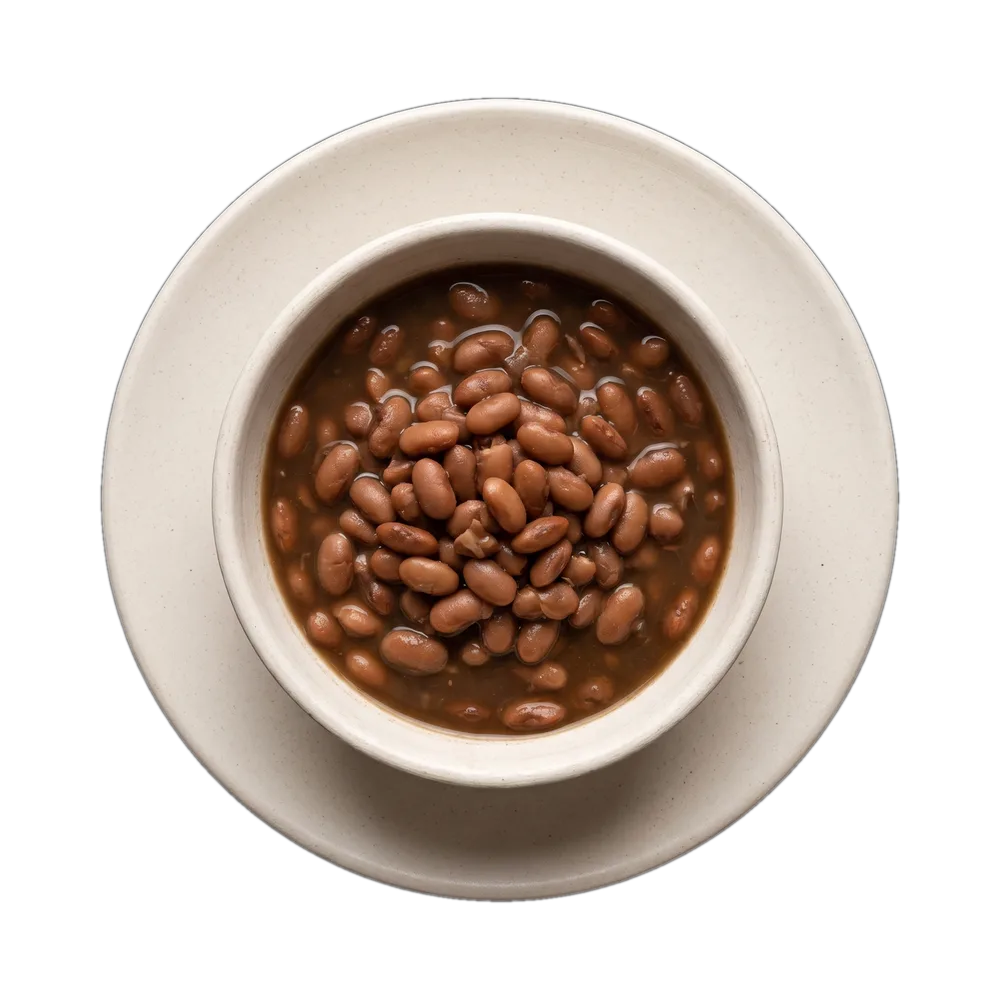
Frijoles de la Olla
19kcal0.6g protein0.1g fat4.5g carbs*Estimates computed from the ingredient list; cost uses average US supermarket prices. Not a substitute for packaging measurements or your receipt.
only in an optional ingredient: dairy
Restrictions
Only if you add itdairy (cheese cotija)Leave that ingredient out and the dish does not have it.
Diets
Vegetarian · without oneVegan · without onePescatarian · without oneNo pork · without oneNo alcohol
Worked out from the ingredient list. It knows nothing about brands, shared equipment or cross contamination, and it is not a certification — if you have an allergy, you still have to read the label.
Ingredients
Servings:
| 1 lb | dried pinto beans (or black, flor de mayo, or Peruano) |
| 8 cup | water |
| 1 unit | white onion (half, left in one piece) |
| 2 clove | garlic (peeled, left whole) |
| 4 sprig | epazote (fresh leaves, or 1/2 tsp dried) |
| 1 tsp | salt |
Optional
Not counted above. The dish works without them.
| 1 unit | serrano chile (whole, unpierced, cooked with the beans) |
| 1 tbsp | lard (traditional household enrichment, stirred in at the end) |
| ¼ cup | cilantro (chopped, at the table) |
| ½ cup | cotija (crumbled, at the table) |
| 1 unit | lime (wedges, at the table) |
Steps
- prep10 minspread on a sheet tray, then rinsed under cold waterdried beans, tipped out and picked over for split beans, shrivelled ones and the small stones and clods that survive commercial sorting, then rinsed until the water runs clear. The stone is the reason this step exists and it is not a superstition — a pebble the size of a bean is invisible in a bowl and finds a molar immediately. Rinsing takes off field dust and the loose surface starch that would otherwise thicken the broth into something cloudy and pasty rather than clear. No soaking is required. If you do soak overnight, drain and start with fresh water, and cut roughly a quarter off the cooking time
- pressure-cook35 minhigh pressure, 35 minutes unsoaked (25 soaked); pot no more than half fullbeans + water to cover by about two inches + onion half + garlic + epazote, sealed and brought to high pressure. This is the step the dish exists to teach. In an open pot the liquid cannot exceed 212°F, and softening the beans' cell walls at that temperature takes two and a half hours; under about 15 psi the water boils at roughly 250°F instead, and the same pectin breaks down in a little over half an hour. Nothing else changes — it is the same water, the same beans, and the same chemistry running faster. Do not fill past half: beans triple in volume and throw a starchy foam that can reach the vent, and a blocked vent is the only genuinely dangerous failure this recipe has. Hold the salt for now. Leave the serrano whole and unpierced if using; cut, it releases far more heat than a pot of plain beans wants
- rest20 minnatural release, lid untouched, 15 to 20 minutesthe sealed cooker, left to drop pressure on its own. Do not vent it manually. A quick release drops the pressure faster than the liquid inside the beans can equalize, so that superheated water flashes to steam inside each bean and blows the skins off — you get a pot of loose skins floating over broken beans, which is a texture failure you cannot undo. Natural release also means the beans go on cooking gently as the temperature falls, which is part of the timing above rather than dead time
- season3 minlid off, beans already tender, tasted+ salt, once a bean crushes to cream between finger and thumb with no chalky core. Test three or four beans from different parts of the pot, not one. Salting now rather than at the start is the majority practice and the traditional reasoning is that early salt firms the skins; the honest position is that at least one tested pressure-cooker source salts from the beginning with no ill effect, so this is a preference with a good rationale rather than a rule. What is not a preference is tasting a broth whose final volume you can actually see — salt added at the start seasons a quantity of liquid you were guessing at
- simmer10 minuncovered, barely bubbling; stovetop route: 20 to 30 minutes heresalted beans, simmered gently uncovered so the salt penetrates and the broth reduces a little and turns silky from the starch the beans have shed. Fish out the onion and garlic. Do not stir hard or boil — beans that have just given up their structure will break apart into a purée under agitation, and the finished dish should be whole beans suspended in a lightly thickened caldo. The stovetop route reaches this same point after about two hours of bare simmering; if it needs more water, add it boiling, because cold water shocks the beans and darkens the pot
- store2 minbeans kept in their own broth, refrigerated up to 5 days or frozenbeans, cooled and stored submerged in their caldo, which is the dish and not a by-product — a pound of beans yields about five cups of beans and two cups of broth, and draining it away throws out the seasoning, the body and the point. They improve for two or three days as the broth thickens. Beans lifted out of this pot with a slotted spoon and fried in lard become frijoles refritos, which is where most of a household pot actually ends up