Potato Chips
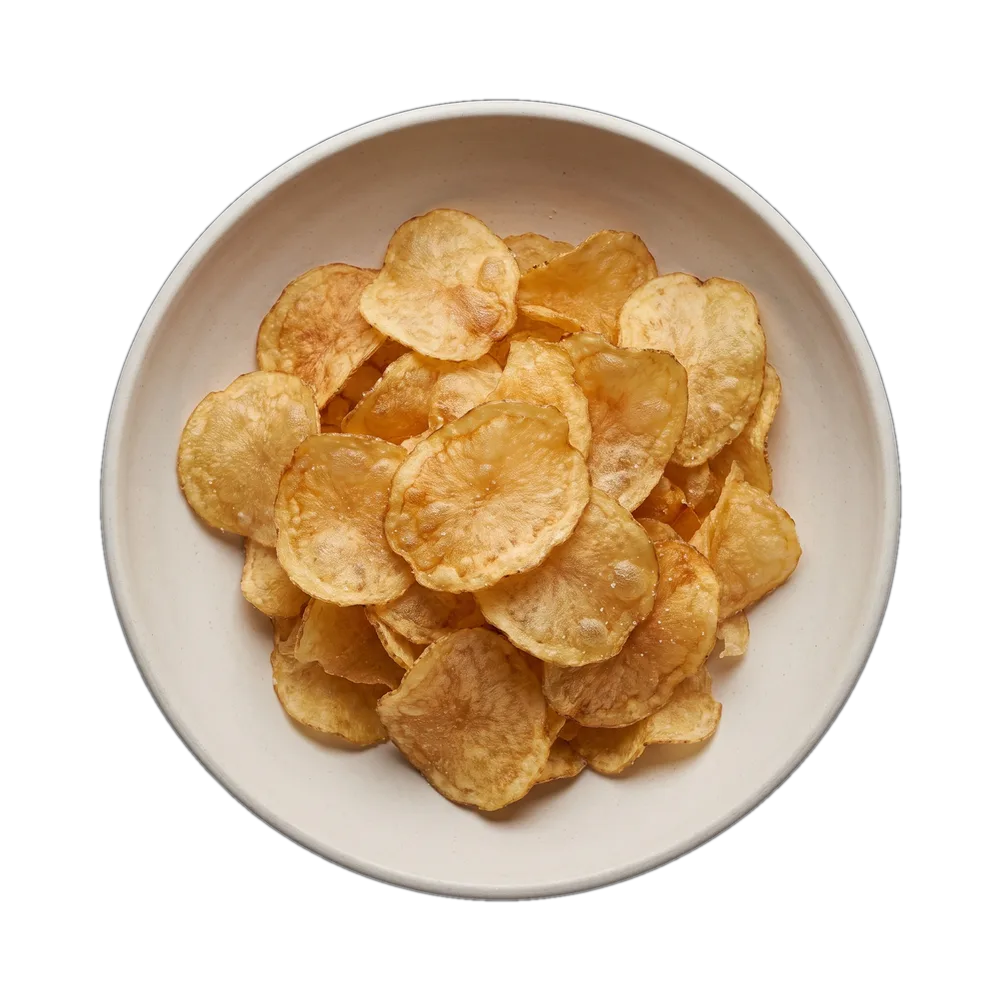
1304kcal9.1g protein108.5g fat79.4g carbs*Estimates computed from the ingredient list; cost uses average US supermarket prices. Not a substitute for packaging measurements or your receipt.
Contains peanut · sometimes contains gluten — check the label
Restrictions
ContainspeanutIt is in an ingredient you cannot leave out.
Sometimes contains — check the labelgluten (chili (powder))Some brands have it, some do not. The recipe cannot tell, so this is the one you check yourself.
Diets
VegetarianVeganPescatarianNo porkNo alcohol
Worked out from the ingredient list. It knows nothing about brands, shared equipment or cross contamination, and it is not a certification — if you have an allergy, you still have to read the label.
Ingredients
Servings:
| 2 lb | russet potatoes (scrubbed, peeling optional) |
| 3 l | water (cold, for the soak) |
| 2 l | peanut or other neutral high-smoke-point oil |
| 1 ½ tsp | fine salt |
Optional
Not counted above. The dish works without them.
| ¼ cup | distilled white vinegar (in the soak water) |
| 1 tsp | smoked paprika (in the finishing salt) |
| ½ tsp | onion powder (in the finishing salt) |
| ½ tsp | black pepper (finely ground) |
| 1 slice | nori (toasted, ground to a powder for nori salt) |
| 1 tsp | chili powder (in the finishing salt) |
Steps
- slice15 minmandoline, thinnest workable setting — about 1.5 mm / one-sixteenth inch, guard onrussets into rounds of one thickness. Uniformity is not neatness here, it is the whole schedule: a batch finishes together or it does not finish at all, and a pot holding slices of two thicknesses gives you scorched wafers and leathery half-cooked discs out of the same scoop. A mandoline is the tool because it holds a setting; a knife can do it only if the edge is keen enough to part the potato rather than wedge through it, and a blunt blade wanders thick and thin across a single bulb. Cut the slices into cold water as they fall so they do not oxidise on the board.
- rest30 minfully submerged in cold water, water changed once when it cloudsslices + cold water, until the water goes milky and then, after the change, stays clear. That cloud is free starch coming off the cut faces. Left there it gelatinizes the instant it meets hot oil and welds the slices into a raft with a tough, glassy skin — the single most common reason homemade chips come out of the pot in clumps. If you are using the vinegar variation, it goes in the second water.
- prep10 minspread in a single layer on towels, blotted top and bottomdrain and dry every slice until the surface is matte and faintly tacky rather than wet. Surface water flashes to steam on contact with 350°F oil, which spits hard enough to be dangerous and, worse, steals exactly the heat you need at the moment the chip enters. A frying chip is a dehydration process with a browning reaction attached; water you did not remove with a towel has to be removed with the oil's heat instead, and you pay for it in temperature.
- fry20 min350°F / 177°C, small loose handfuls, oil back to temperature between every batchdried slices lowered in and stirred apart at once, then moved occasionally until the loud rolling boil quiets to a lazy fizz and the edges are pale gold. The noise is the tell: it is the sound of water leaving, and when it slows the chip is nearly dry. Pull them a shade before the colour you want — they keep browning off the heat. Crowding is the failure mode this whole recipe is arranged against: too many slices at once drops the oil below the point where water escapes faster than fat soaks in, and the chip absorbs oil instead of shedding water, coming out limp and greasy. Use a thermometer and wait for the recovery; guessing costs you the batch.
- season2 minimmediately out of the oil, onto a rack, tossed while hotdrained chips + fine salt, thrown on the moment they leave the fat. The thin film of hot oil on the surface is the only adhesive a chip has, and it sets within a minute; salt a cooled chip and the grains slide straight to the bottom of the bowl. Fine salt, not flakes — a flake bounces off. Flavoured powders go on in the same window, mixed into the salt beforehand so they distribute rather than land in patches. Drain on a rack and never in a lined bowl: a pile traps its own steam and softens the shell you just built.
- rest5 minsingle layer on the rack, uncovered, until fully coolchips left alone until they reach room temperature. They come out of the oil slightly bendy and finish crisping as they cool, because the last of the interior moisture equalises out through a surface that is already dry and the starch sets rigid as its temperature falls. Judging doneness on a hot chip therefore over-fries the batch. Once cold they keep a couple of days in a sealed container; humidity, not time, is what kills them.