Italian Beef
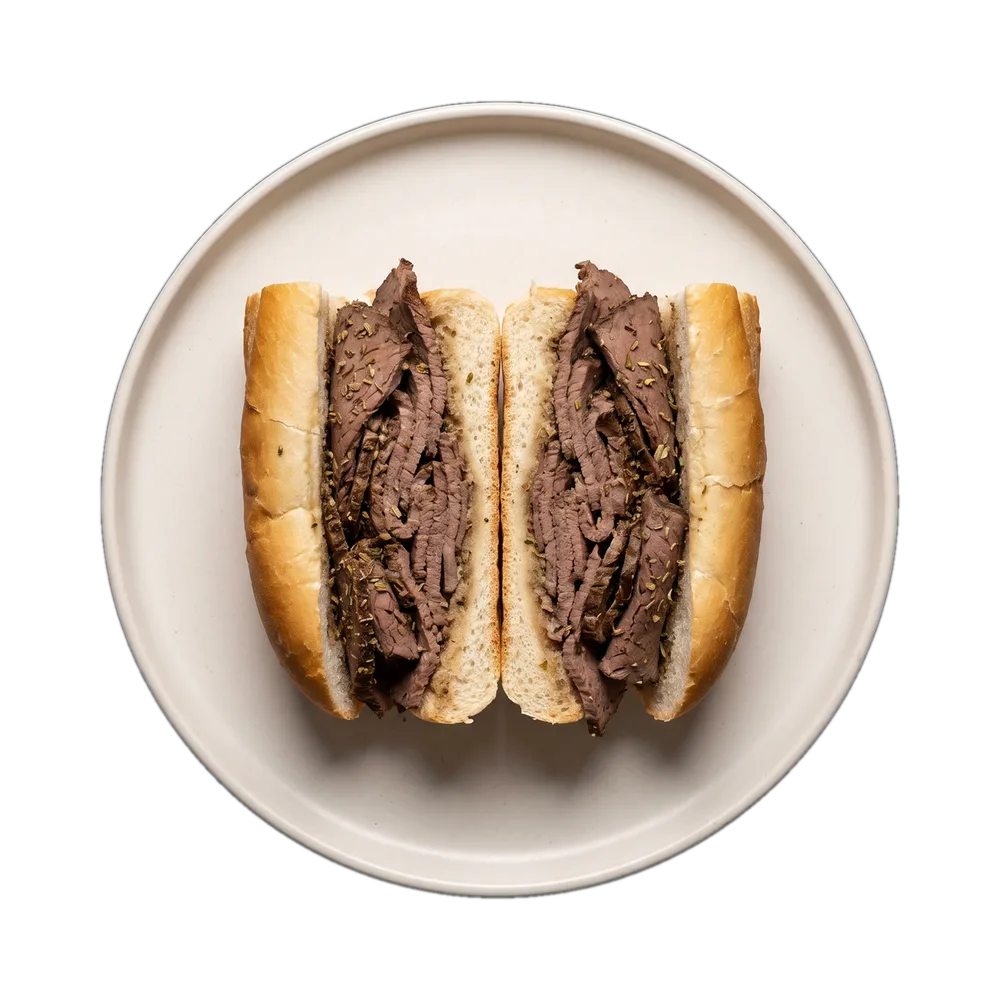
693kcal56g protein36.1g fat32.5g carbs*Estimates computed from the ingredient list; cost uses average US supermarket prices. Not a substitute for packaging measurements or your receipt.
Contains gluten, dairy
Restrictions
Containsgluten · dairyIt is in an ingredient you cannot leave out.
Diets
No porkNo alcohol
Worked out from the ingredient list. It knows nothing about brands, shared equipment or cross contamination, and it is not a certification — if you have an allergy, you still have to read the label.
Ingredients
Servings:
| 5 lb | beef bottom round or top round roast (tied) |
| 1 tbsp | kosher salt (for the dry brine) |
| 1 tbsp | black pepper (coarsely ground) |
| 1 tbsp | oregano (dried) |
| 1 tbsp | basil (dried) |
| 2 tsp | thyme (dried) |
| 2 tsp | rosemary (dried, crumbled) |
| 1 tbsp | fennel seed (lightly crushed) |
| 1 tbsp | garlic powder |
| 2 tsp | celery seed |
| 2 tsp | paprika |
| 1 tsp | red pepper flakes |
| 2 tbsp | neutral oil (for the sear) |
| 3 tbsp | butter |
| 2 l | beef stock (low-sodium) |
| 12 unit | sturdy Italian or French rolls (split, hinged) |
| 1 ½ cup | hot giardiniera (drained, roughly chopped) |
Optional
Not counted above. The dish works without them.
| 2 unit | sweet peppers, roasted and sliced (the mild topping) |
| 2 unit | celery (sliced, for homemade giardiniera) |
| 1 unit | carrot (sliced thin, for homemade giardiniera) |
| 3 unit | jalapeños (sliced, for homemade giardiniera) |
| ½ cup | olives (green, chopped, for homemade giardiniera) |
| 1 cup | white wine vinegar (for homemade giardiniera) |
| ½ cup | olive oil (for homemade giardiniera) |
| 6 slice | mozzarella (low-moisture, sliced — the cheesy beef) |
Steps
- season720 minuncovered on a rack in the refrigerator, overnightbeef roast + kosher salt + black pepper + oregano + basil + thyme + rosemary + fennel seed + garlic powder + celery seed + paprika + red pepper flakes, rubbed over every face and left uncovered and cold. The salt draws moisture to the surface, dissolves, and is then reabsorbed carrying seasoning into the muscle — a rub applied ten minutes before cooking seasons only the crust. Uncovered matters as much as salted: a dry surface browns, a wet one steams grey. This is an improvement rather than a requirement, and the roast can go straight to the sear if the day does not allow it
- sear15 minheavy Dutch oven, oil shimmering, every face, no crowdingroast + neutral oil, turned onto each side in turn and left there until it is deeply browned rather than merely coloured. The fond this leaves on the pan floor is the backbone of the jus — it is where the roasted, savoury notes come from, and a roast that goes into the stock pale gives a thin, flat cooking liquid that will still be thin and flat when it becomes the sauce. Do not move the meat around looking for progress; contact and stillness are what build crust
- roast210 min300°F, covered, stock coming halfway up the roastseared roast + butter + beef stock poured in around it, brought to a bare simmer on the stove and moved to a low oven until a thermometer in the centre reads 190 to 195°F and a fork twists in the meat with resistance but no fight. Season this liquid properly now, because after straining it *is* the jus — the sandwich has no separate sauce, and an underseasoned pot cannot be fixed at assembly. The stock comes halfway up and no further: submerge the roast and you are braising it to shreds, which is the opposite of what a sliceable roast needs
- rest720 minmeat left in its liquid, covered, refrigerated overnightthe whole pot, meat and cooking liquid together, cooled and refrigerated until the beef is cold and firm all the way through. This is the step the shortcut recipes drop and the one the sandwich cannot survive without: warm roast beef tears rather than slices, and no knife or slicer will take paper-thin sheets off it. Cold meat is rigid enough that the blade shears cleanly instead of dragging. Leaving it submerged also keeps the lean muscle from drying and lets it reabsorb liquid. If you are pressed, ninety minutes in the freezer firms it enough to slice, but overnight is better and the fat cap lifts off solid the next morning
- slice20 minmeat fridge-cold, against the grain, as thin as the blade allowschilled roast, lifted from the jelled liquid and shaved into sheets — a deli slicer if you have one, otherwise a long sharp knife and patience. Against the grain is not a refinement here: this is lean, hard-working muscle, and slicing with the fibres leaves long strands that eat like rope. Thin enough is the definition of the dish — the beef should drape rather than stack, so each mouthful is jus-soaked meat and not a slab of it. Strain the cooking liquid through a fine sieve, skim the fat cap and return it to the stove
- simmer8 minjus held just below a boil, slices in for 30 to 60 secondsstrained jus brought to a bare simmer + sliced beef dropped in by the tongful, lifted out as soon as it loses its cold and turns from pink-grey to warm brown. This is a dip, not a second cooking. The meat is already fully cooked, and every extra minute in hot liquid tightens the fibres and leaches out colour — the sources that simmer for half an hour get grey, tough, tired beef, and longer is never better here. If the jus tastes thin after straining, reduce it before the meat goes near it, not with the meat in it
- top4 minassembled and eaten standing, immediatelysplit roll + a heavy tangle of hot beef + giardiniera, and then the ordering choice, which is the sandwich's own vocabulary: dry, drained on the tongs; wet, with a ladle of jus poured over the meat; or dipped, the whole assembled sandwich plunged into the jus for a second or two and pulled straight out. Dipped is the classic and has a clock on it — the roll is engineered to hold jus for a few minutes, not indefinitely, which is why this is eaten leaning forward over the paper it came in. Sweet roasted peppers are the mild topping and going halfway with both is entirely standard